
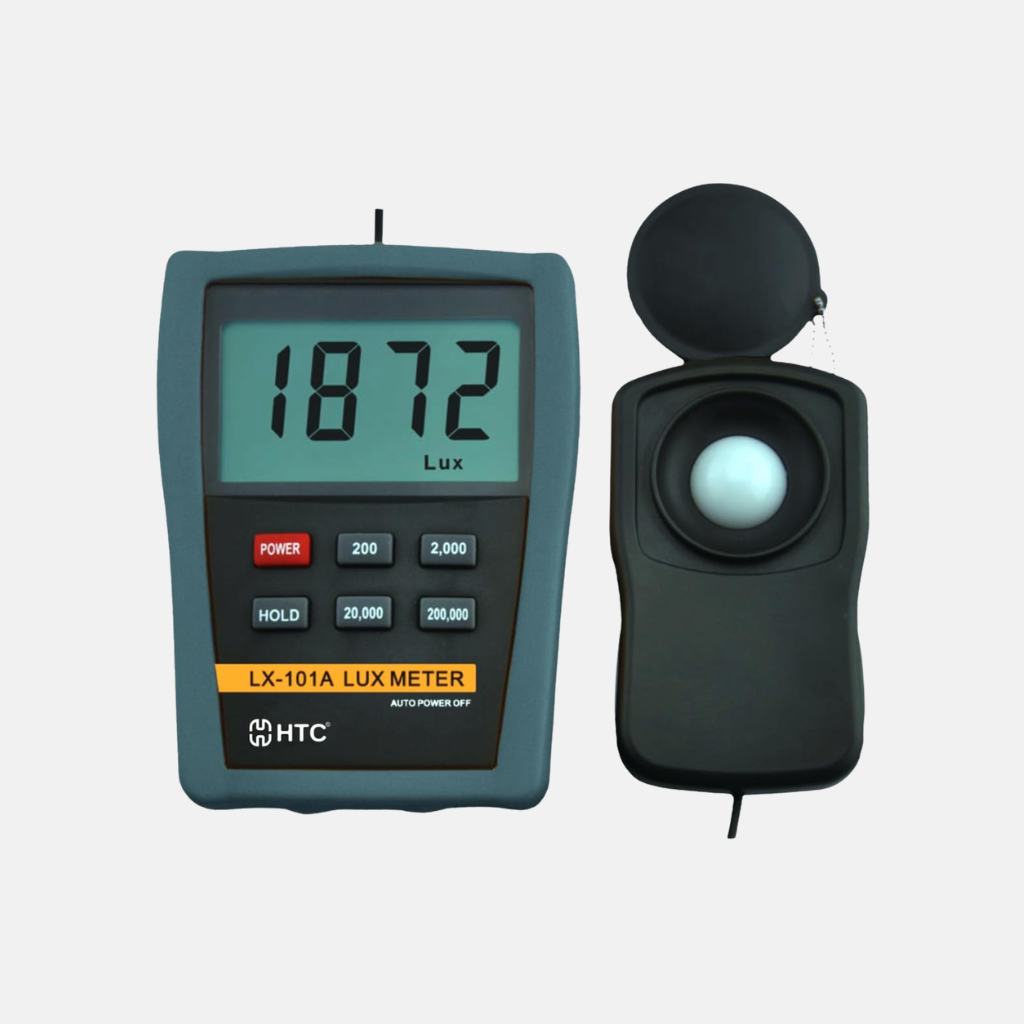
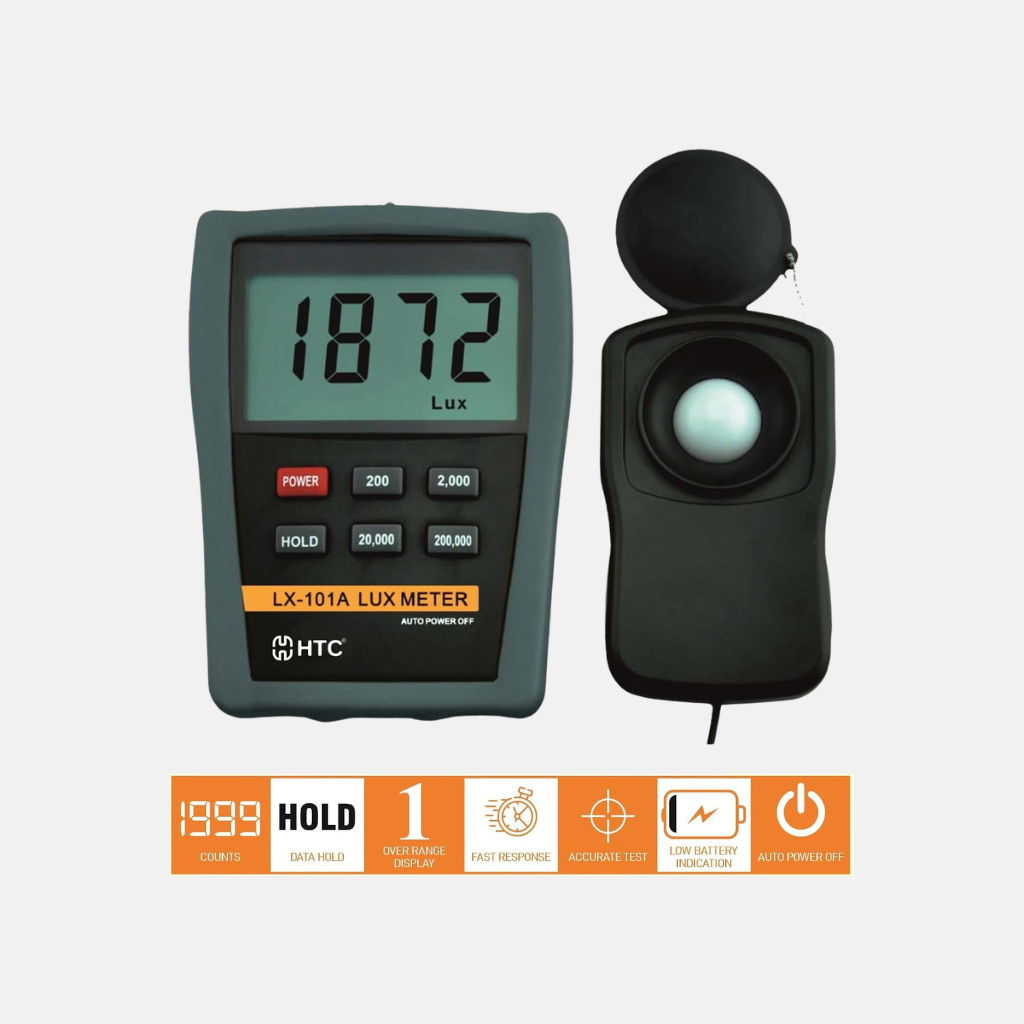
Light Meter Lux Meter – Accurate Digital Light & Illumination Measurement
A Light Meter Lux Meter is a professional measuring instrument used to measure the intensity of visible light falling on a surface. It provides an objective and convenient way to evaluate illumination in offices, factories, warehouses, laboratories, schools, hospitals, commercial buildings and many other environments.
Instead of estimating brightness with the human eye, a Digital Lux Meter provides numerical measurements, generally expressed in lux (lx). These readings allow electricians, engineers, lighting professionals, facility managers and maintenance technicians to measure, record and compare lighting conditions accurately.
Whether you are checking workplace illumination, planning a lighting installation, evaluating LED lights or carrying out a professional lighting survey, a reliable Light Meter can be an essential addition to your test and measuring toolkit.
What is a Light Meter or Lux Meter?
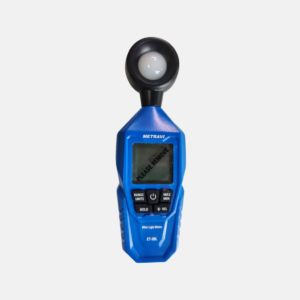
A Lux Meter, also called a Light Meter or Illuminance Meter, is an electronic device designed to measure illumination.
The instrument typically contains a light-sensitive sensor that detects the amount of visible light reaching it. This information is processed electronically and shown as a numerical value on the meter’s digital display.
Lux meters are useful because the human eye naturally adapts to changes in brightness. A room may appear sufficiently bright after your eyes adjust, but the actual illumination at a working surface can be quite different from another area that appears similar.
A digital light meter provides measurable data instead of relying on visual judgment.
What Does a Lux Meter Measure?
A lux meter measures illuminance, or the amount of luminous flux falling on a surface. The standard unit used for this measurement is lux (lx).
For practical applications, this means you can position the sensor at a desk, workbench, production station, warehouse aisle or other relevant surface and measure how much illumination is reaching that point.
Taking readings at multiple locations can provide a useful picture of how light is distributed throughout a room or working area.
Why is Light Measurement Important?
Lighting affects much more than the appearance of a space. Suitable illumination can be important for visibility, detailed work, inspection, productivity and the overall functionality of a working environment.
Light levels may vary because of:
- Number and type of lamps
- Position of lighting fixtures
- Distance from the light source
- Natural daylight
- Windows and openings
- Furniture and machinery
- Shadows and obstructions
- Wall and ceiling surfaces
- Condition and age of lamps
A Digital Light Meter Lux Meter allows these differences to be measured objectively.
Ideal for Office Lighting Measurement
Office environments contain workstations, meeting rooms, reception areas, corridors and other spaces with different lighting conditions.
A digital lux meter can be used to measure illumination at desks and other working surfaces. Facility managers can take readings at different points and compare the results to understand lighting distribution.
Measurements can also be repeated at different times of the day to evaluate the influence of daylight on indoor illumination.
Industrial & Factory Applications
Industrial facilities often require lighting across large and complex areas. Production lines, assembly stations, machine areas and quality-control points may have different illumination requirements.
A Light Meter Lux Meter can be useful for assessing:
- Production floors
- Assembly lines
- Machine shops
- Quality inspection areas
- Maintenance workshops
- Packaging areas
- Electrical rooms
- Manufacturing facilities
- Storage areas
- Loading zones
Taking objective measurements helps engineers and facility teams better understand actual lighting conditions.
Warehouse Light Measurement
Warehouses can present unique lighting challenges because tall storage racks and narrow aisles can create uneven illumination.
Using a Digital Lux Meter, facility professionals can measure light levels at different points throughout the warehouse.
Measurements can be particularly useful after installing new lights, changing storage layouts or replacing older lamps with LED lighting.
Commercial & Retail Applications
Lighting plays an important role in retail stores, showrooms, hotels, restaurants and commercial premises.
A Light Meter can help measure illumination around:
- Product displays
- Sales counters
- Showrooms
- Reception areas
- Restaurants
- Hotel interiors
- Commercial offices
- Corridors
- Customer service areas
By measuring several points, professionals can evaluate how evenly lighting is distributed throughout the space.
Laboratory & Educational Use
A Digital Light Meter can also be valuable in laboratories, schools, colleges, libraries and technical training institutes.
Lux measurements may be required for experiments, technical demonstrations or general assessment of classroom and laboratory lighting.
For applications requiring a specific degree of measurement accuracy, users should select an instrument with appropriate specifications.
Key Benefits of a Digital Light Meter Lux Meter
Objective Light Measurement: Provides numerical illumination readings rather than relying on visual estimation.
Digital Display: Makes measurements convenient to view, record and compare.
Portable Design: Handheld meters can easily be carried between different measurement locations.
Easy Operation: Suitable for routine lighting checks and professional illumination surveys.
Wide Application Range: Useful in offices, industries, laboratories, warehouses, schools and commercial premises.
Lighting Comparison: Helps compare illumination between different areas or lighting arrangements.
Useful for Maintenance: Measurements can be taken before and after lamp replacement or lighting upgrades.
Professional Testing Tool: Ideal for electricians, engineers, facility managers and lighting professionals.
Who Should Use a Lux Meter?
A Light Meter Lux Meter is suitable for a wide variety of users, including:
- Electricians
- Electrical engineers
- Lighting professionals
- Facility managers
- Maintenance technicians
- Industrial engineers
- Quality-control professionals
- Building maintenance teams
- Interior lighting professionals
- Laboratory technicians
- Educational institutions
- Commercial property managers
Anyone who needs objective illumination measurements can benefit from having a reliable digital lux meter.
Useful for LED Lighting Installation & Upgrades
LED lighting has become widely used in industrial, commercial and office environments.
When replacing conventional lighting with LEDs, a lux meter allows technicians to compare illumination before and after installation.
Baseline measurements can be taken at selected locations before the upgrade. The same locations can then be measured after the new lighting system is installed.
This provides actual measurement data for comparing lighting performance rather than relying only on visual impressions.
Light Meter for Lighting Installation
During a new lighting installation, a Digital Light Meter can help technicians evaluate how effectively fixtures illuminate the intended working area.
Measurements can be taken at several points to identify variations in illumination.
If fixtures are repositioned or replaced, measurements can be repeated to compare the resulting lighting conditions.
How to Choose the Right Lux Meter
Different Light Meters offer different specifications and functions. Before purchasing, consider your actual application.
Important factors include:
Measurement Range: Select a meter capable of covering the expected illumination levels.
Accuracy: Professional and technical applications may require a particular measurement accuracy.
Resolution: Consider how much measurement detail is required.
Sensor Design: Check the type and configuration of the light-sensitive sensor.
Measurement Units: Many models display lux, while some may offer additional light-measurement units.
Display: A clear digital display makes field measurements easier.
Data Hold: This function, when available, can freeze a measurement on the screen for convenient recording.
Maximum/Minimum Functions: Certain models may allow users to monitor maximum or minimum measured values.
Data Logging: Advanced instruments may provide recording or connectivity features.
Always confirm these functions from the specifications of the individual model before purchasing.
How to Take Better Lux Measurements
To obtain useful measurements, position the light sensor at the actual location or surface where illumination matters.
For example, if you are assessing a desk or production workstation, take readings around the working surface.
For larger areas, take multiple measurements instead of relying on a single reading.
Avoid unnecessarily blocking light from reaching the sensor with your body or other objects.
When comparing measurements over time, try to maintain similar measurement positions and environmental conditions. Remember that daylight can significantly influence indoor readings.
Light Measurement Standards
Recommended or required illumination levels can vary according to the type of building, activity, workplace and applicable standard.
If a Light Meter is being used for workplace safety, regulatory compliance, quality assurance or formal lighting assessment, users should refer to the relevant standards for their application and location.
The instrument’s measurement accuracy, calibration status and testing methodology should also be appropriate for the intended assessment.
Buy Light Meter Lux Meter from Paul Radio Stores
Looking to buy a Light Meter Lux Meter online for professional or industrial applications? Paul Radio Stores offers a wide selection of test and measuring instruments for electricians, engineers, technicians, industries, laboratories and maintenance professionals.
Customers can choose a Digital Lux Meter according to the required measurement range, accuracy, resolution, sensor configuration and additional features.
Whether you require a Lux Meter for office lighting, factory illumination, warehouse lighting, laboratory testing, LED installation, commercial buildings or professional lighting surveys, choosing the right instrument can help you obtain reliable and meaningful illumination measurements.
Explore the available Light Meter Lux Meter options and select the instrument that best matches your application.
Paul Radio Stores – Your Trusted Source for Professional Test & Measuring Instruments.
Reviews
There are no reviews yet.